
Dec. 2026
Wendy Schneider
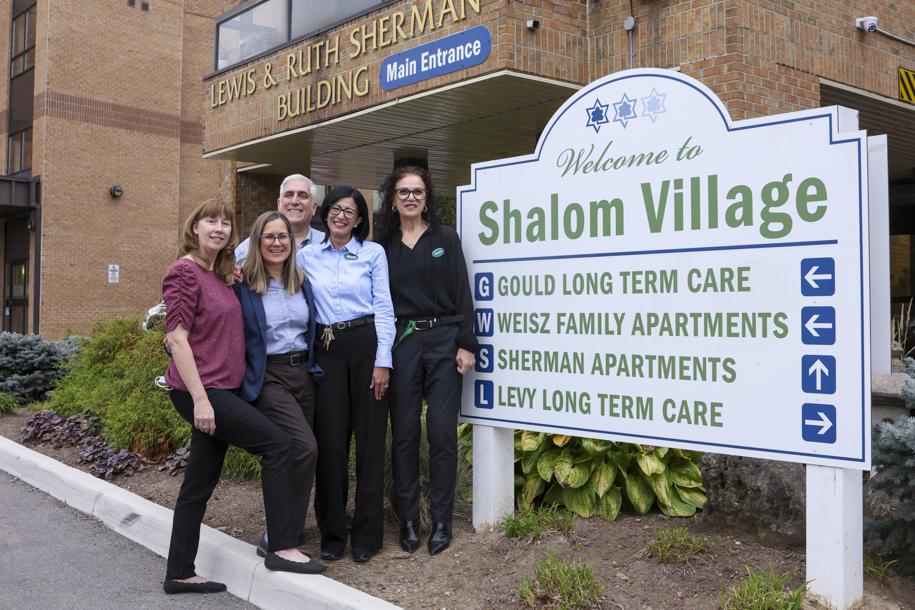
When Marianne Klein first arrived at Shalom Village on July 17, 2023, she knew she had big shoes to fill. The Hamilton Jewish community’s long-term care home and seniors’ residence had built a strong reputation over more than five decades, but the COVID-19 pandemic had been a difficult period, testing the organization and affecting the confidence people had in its leadership and care. Klein’s approach to rebuilding was straightforward: before worrying about reputation, Shalom Village had to get its own house in order. Nearly three and a half years later, she believes the organization has come a long way.
Shalom Village has strengthened its compliance and quality-of-care practices, developed more rigorous processes and policies, and renewed its focus on residents and families. And the organization is once again attracting attention beyond Hamilton — not simply as a place that provides care, but as a partner in innovation and a potential model for how seniors’ services can evolve across Ontario.
“We’re beginning to be looked at as leaders in this industry,” Klein says. “These are partners that believe in us, that trust us, and that know that we’ll accomplish what we say we’re going to accomplish as an organization.”
More than just a care home
For Klein, however, the most meaningful measure of success is what happens every day inside Shalom Village. One resident captured the distinction in a way Klein has never forgotten: “I came to Shalom not because I needed the care, I came to Shalom because I needed the community.”
“That said everything,” Klein says.
As a campus of care, Shalom Village offers services across the continuum. People might begin by attending a fitness class, visiting Bubby’s Café or participating in the adult day program. Over time, they may discover other services or, eventually, need a different level of support. The goal is to meet people where they are, rather than waiting until they reach a point of crisis. That includes recognizing when a caregiver is struggling and helping that person find support before their own health suffers.
Shalom Village has offered caregiver support initiatives, including a psychoeducational program developed in partnership with the Ontario Caregiver Organization. The program brought caregivers together to learn and support one another. When the formal sessions ended, participants continued meeting independently.
For Klein, that was a particularly heartening outcome: a program had helped create a community of people who could continue to lean on one another.
A nursing home without walls
Klein’s vision for Shalom Village is not confined to the people who already live there. She wants the organization’s expertise, facilities and programming to benefit more seniors throughout the Hamilton community — including those who may be living alone, struggling with isolation or unsure where to turn for help.
That commitment has led to an exciting opportunity: Shalom Village has been invited to participate in an Ontario pilot of Nursing Home Without Walls, an initiative inspired by a program developed in New Brunswick by researcher Suzanne Dupuis.
Klein first discovered the model more than three years ago and was so convinced of its potential that she contacted Healthcare Excellence Canada to learn more. Shalom Village initially applied to be one of Ontario’s first pilot sites but was unsuccessful. When additional funding became available, the organization was approached to participate.
The concept is both practical and far-reaching. Rather than treating long-term care as the destination for seniors whose needs have become unmanageable, Nursing Home Without Walls aims to help people remain healthy and independent in their own homes for as long as possible.
The program is in its planning stages, and its final services have yet to be determined. The proposed areas of focus include clinical and personal-care outreach, social and wellness programming, system navigation, caregiver support and connections to community services.
For families, even knowing where to begin can be daunting. Klein says she speaks with three or four family members in a typical week who ask where to go, what services are available and which options might be appropriate for a loved one.
A navigation service could help seniors and families understand their options, assess their needs and connect with appropriate resources — whether at Shalom Village or elsewhere in Hamilton. Other services that will be offered will include wellness activities, social connections and access to meals.
The pilot has limited funding from Healthcare Excellence Canada, so creativity and careful planning will be essential. But Klein sees its potential extending well beyond the initial project.
“We are at the very edge of something really exciting for Ontario,” she says, “and that will happen right here at Shalom Village.”
It is a significant vote of confidence in an organization that has worked hard to rebuild its foundations.
Seniors helping seniors
Innovation at Shalom Village is often inspired by a simple question. When Klein asked her team what it would take to help seniors remain active, mobile and independent in their own homes, the answer was clear: exercise, balance, social connection and access to useful health information.
With a $25,000 grant from the Ontario Ministry for Seniors and Accessibility, the team developed Senior Spark, a free program co-designed by seniors for seniors. The activities are led by volunteer seniors alongside a staff member and combine physical movement, social interaction and health education.
In approximately nine months, more than 100 seniors from the greater Hamilton community had taken part.
The program includes Walkersize, falls-prevention and sit-to-stand exercise classes, along with nutrition, social activities and opportunities for intellectual stimulation. Education about preventing falls is particularly important, given the potentially serious consequences of falls among older adults.
The team also recognized that not everyone could get to Shalom Village. Transportation difficulties and social isolation can keep seniors from participating, even when they would benefit from the activities.
In response, Shalom Village partnered with Cable 14 to bring some of its programming directly into people’s homes. Five episodes were recorded for a seniors’ series, alongside five produced by the City of Hamilton. Shalom’s offerings include fitness programming, an exploration of local birds and nature, and an activity about creating memory boxes to preserve family stories and keepsakes for future generations.
Together, these initiatives reflect Klein’s belief that caring for seniors means finding creative ways to remove barriers — not expecting seniors to overcome every obstacle on their own.
Above all, a Jewish home
Shalom Village’s commitment to inclusion is inseparable from its identity as a Jewish home. When she first assumed her role, Klein sought the advice of former executive directors Pat Morden and the late Sheila Burman. During one conversation in Klein’s office, Burman pointed a finger at her and declared firmly, “Marianne Klein, this is a Jewish home.”
“Indeed it is,” Klein replied, “and it will continue to be.”
That commitment is expressed through kosher food, Jewish holiday celebrations, monthly Shabbat services and community Kiddush luncheons. The home also hosts a much-loved Chanukah latke bake, when members of the leadership team put on aprons and hairnets and prepare fresh latkes for residents in the dining rooms.
Klein remembers standing at the entrance on Rosh Hashanah as Andrea Levy, Shalom Village’s balabusta, welcomed everyone with freshly baked challah, honey and apples, offering wishes for a sweet new year. Jewish residents and non-Jewish residents alike were invited to share in the moment.
For Klein, that is what a living Jewish environment looks like: traditions that are respected, celebrated and generously shared.
Levy’s work, supported by the Hamilton Jewish Federation, is central to maintaining Jewish life at Shalom Village, alongside the Jewish Life Committee. Kosher food is available, and Bubby’s Café — open daily from 10 a.m. to 3:30 p.m. — offers the wider community an opportunity to enjoy kosher meals, coffee and other refreshments.
Klein is equally committed to ensuring that the home’s Jewish identity creates opportunities for understanding. With most employees not Jewish, she sees an important responsibility to educate staff about Jewish traditions and antisemitism. Annual antisemitism training and opportunities to learn about Margaret’s Legacy Holocaust Learning and Jewish Advocacy Centre are among the ways the organization approaches that responsibility.
At the same time, Klein wants every resident’s background to be respected. A recent National Day for Truth and Reconciliation observance offered a powerful example. Rather than having the event designed solely by staff, the team invited Indigenous residents and employees to shape it. One Indigenous resident suggested wearing orange ribbons, drawing a connection with the black ribbons worn in Jewish mourning.
She went on to make orange ribbons for everyone.
For Klein, the gesture demonstrated something profound: people were not merely coexisting within the same building. They were learning from one another, recognizing each other’s experiences and finding meaningful points of connection.
Shalom Village is also working to ensure that its cultural designation translates into access for those who need it. Klein has advocated for changes to long-term care admissions rules so that people requiring culturally specific care can be appropriately prioritized. Through a provincial pilot involving cultural homes, including Polish, Ukrainian and Greek facilities, Shalom Village is pressing for a system that better recognizes the importance of religious and cultural needs.
As Klein told a former minister of long-term care, kosher meals are not simply a preference to accommodate; they are a matter of religious rights. She continues to advocate for improvements, recognizing that meaningful change in a complex system takes time.
Partnerships and team work
Shalom Village’s renewed standing is also reflected in its partnership with McMaster University. As a founding partner of OnSPARK, a research initiative led by Dr. Andrew Costa, the organization contributes to work using securely managed resident data to support research, analytics and quality improvement. The potential benefits extend beyond Shalom Village, helping advance knowledge and care practices across Ontario and Canada.
Klein is quick to credit the people who have made the organization’s progress possible: its nearly 300 employees, its board of directors and the community partners who have supported its direction. Rebuilding after COVID has required sustained work to strengthen policies, procedures and accountability, while also creating room for new ideas and collaboration.
Her own decision to move from Milton to Hamilton has deepened her connection to that work. She and her family had come to love the Jewish community and wanted to be more fully involved. Now, she says, she can attend events, meet more families and contribute beyond the walls of Shalom Village.
She wants others to experience that same sense of belonging — whether by attending Shabbat services or a Kiddush luncheon, stopping at Bubby’s Café, joining a program or volunteering. The invitation is simple: come and see what is happening.
Klein is proud of how far Shalom Village has come, but she doesn’t consider the work finished. She sees an organization that has regained its footing, rebuilt its foundations and earned renewed trust — and one that is ready to take on a broader role in shaping seniors’ care.
“It’s the work of the heart,” she says.
For Klein, that heart is evident in the resident who came seeking community, the caregiver who finds support, the senior who discovers a new friendship in a fitness class, and the staff member who learns to appreciate a tradition that was once unfamiliar.
After a difficult chapter, Shalom Village is once again looking outward with confidence, sharing its experience and embracing the possibilities ahead. Its ambition is not simply to be a better place to receive care, but to help redefine what care can look like: rooted in compassion, strengthened by community and responsive to people long before they reach a crisis.
At Shalom Village, the village is not just a name. It is the promise that no one should have to navigate aging, illness or caregiving alone.
