
April 2026
Nadav Greenhut
In my teenage years, when I began to take a serious interest in playing the piano, I experimented, among other things, with playing popular Israeli music. My playing consisted of simple chords I found online and memorized, a process that became my informal training in performing non-classical music.
One day, by chance, a sheet music booklet by the well-known composer and creator Matti Caspi came into my hands. When I looked at the list of songs, I was astonished. There were masterpieces there — many of which I already knew. But more importantly, I discovered how little I knew about harmony and chords; almost every chord in the book contained markings and numbers I did not recognize.
I worked to decipher those chords for many months. The challenge was great, but when I succeeded, I felt that a new musical and creative window had opened before me.
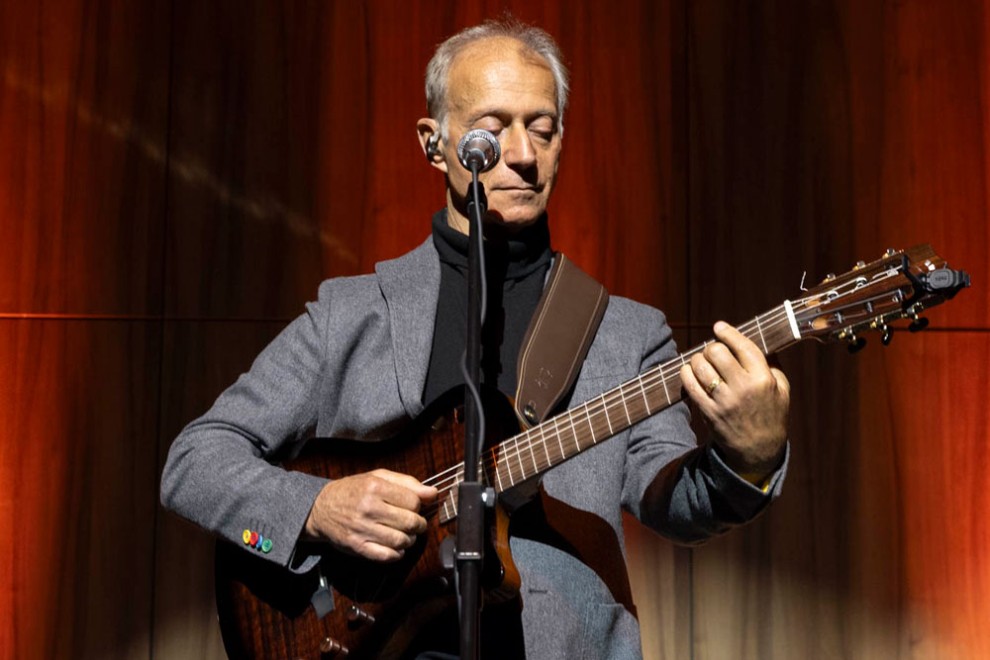
My deepening familiarity with Matti Caspi’s work greatly enriched my musical understanding. I was therefore deeply saddened to learn of his passing in early February, following a cancer diagnosis he had received only a few months earlier.
Public reactions to his death were immense, with thousands accompanying his coffin at Tel Aviv’s Habima Theatre, while radio stations played his songs throughout the day.
Caspi composed some of the most important songs in Hebrew and was one of Israel’s most prolific creators, with more than a thousand works to his name. He produced landmark albums, played on most of them, and integrated global musical influences that shaped generations of musicians, myself included.
Caspi was regarded by many as a “musician’s musician,” yet his melodies are deeply personal and appeal to the general public. On a compositional level, his works are complex—both harmonically and melodically. But surprisingly, they are also highly accessible: it is very easy to hum them and connect with them.
Throughout his extensive career, Caspi collaborated with Israel’s greatest creators. One of the most notable collaborations was with the composer Sasha Argov. Argov, from an older generation of Israeli composers, was known for melodies that were not easy to sing. This collaboration was particularly remarkable, in its being a meeting point between two cultural geniuses from different periods in Israel history. Caspi wisely chose not to alter the harmonic structures of the songs and instead focused on their orchestration and on making them accessible to younger audiences by adding groove and, at times, elements from different styles.
Without a doubt, however, Caspi’s most important and fruitful collaboration was with the gifted lyricist Ehud Manor, who often referred to Caspi as his soulmate. Manor brought great humanity and sensitivity through his texts, managing to express complex emotional states with simplicity and catchy rhythm. Caspi contributed harmonic richness, sophistication, and musical innovation. Together, they produced some of the greatest classics of Israeli music of all time.
One revealing story involves the song “Brit Olam” (“Eternal Covenant”). Ehud Manor wrote the lyrics during his honeymoon, then tucked them away in a drawer for several years. Meanwhile, Matti Caspi had composed a melody for the soundtrack of Celebration at the Snooker, complete in its own right. When Manor eventually brought his long-set-aside text to Caspi, they discovered that the melody and lyrics fit together almost effortlessly — a rare and remarkable union of words and music.
Another important collaboration was with the creator and pianist Shlomo Gronich. Gronich, one of the pioneers of progressive rock and world music in Israel, joined Caspi in creating a joint performance titled “Behind the Sounds,” in which they composed some of their greatest hits. The music born from their synergy was experimental, bold, and intellectual. During their collaboration, Gronich heard a melody Caspi had composed for a satirical television program about a polluting power plant. Gronich sensed a striking contrast between the beauty of the melody and the subject matter. He asked Caspi to write lyrics specifically for it. Caspi agreed, and thus the song “Ve’Otach” (“And You”) was created—once again, Caspi’s melody had summoned its own text.
Like several other major Israeli creators, Caspi also wrote for children. His 1992 album “Bubba Matti” combined high artistic standards, complex rhythms and themes that resonated with both children and adults.
For me, what stands out in Caspi’s work as a whole is his consistent commitment to uncompromising quality, authenticity, and musical expression.Even in his children’s songs, he remained faithful to the same creative spirit, giving little weight to considerations external to the music itself.
Caspi’s death marks the end of a magnificent artistic era that had been an inseparable part of Israeli culture almost since its beginnings. His music continues to be heard and played, and it seems that appreciation for him is only growing—even among younger generations of creators.
I feel deep gratitude for the privilege of knowing and delighting in Matti Caspi’s music—a feeling that, it seems to me, is shared by many others.
